
Reclaiming the Moment of Choice: Undoing the Programming That Says You’re Always Wrong
I spent so much of my life automatically responding to people—answering their questions, reacting to their comments, explaining myself in ways I didn’t even realize I was doing. If someone reached toward me in conversation, I reached back. If someone asked something of me, I answered—even when I didn’t want to. There was no pause,…
Let Your No Be No: Resisting the Urge to Overexplain
There’s a quiet power in saying “no” and letting it stand on its own. For most of my life, that power was elusive. Like many people—especially women (especially neurodivergent)—I felt compelled to explain every decision. I wasn’t just saying no, I was building a case. I’d lay out context, soften the edges, list my reasons,…
The Art of Non-Reaction
Not every situation requires a response. In fact, sometimes the most empowered communication move you can make is no move at all. I used to struggle with this one—big time. As someone who’s neurodivergent, I often felt compelled to respond to everything. My sisters used to joke that I was a last-word junkie. And, honestly,…
Polarity and the Energetic Average
It’s easy to treat our well-being as something to compartmentalize. We care for our bodies but ignore our thoughts. We focus on spiritual growth but forget to eat lunch. We journal and meditate but push through exhaustion as though rest were a luxury instead of a need. But the truth is: wholeness isn’t about any…

Alchemizing with Elevated Thought: Transmuting Fear and Reclaiming Flow
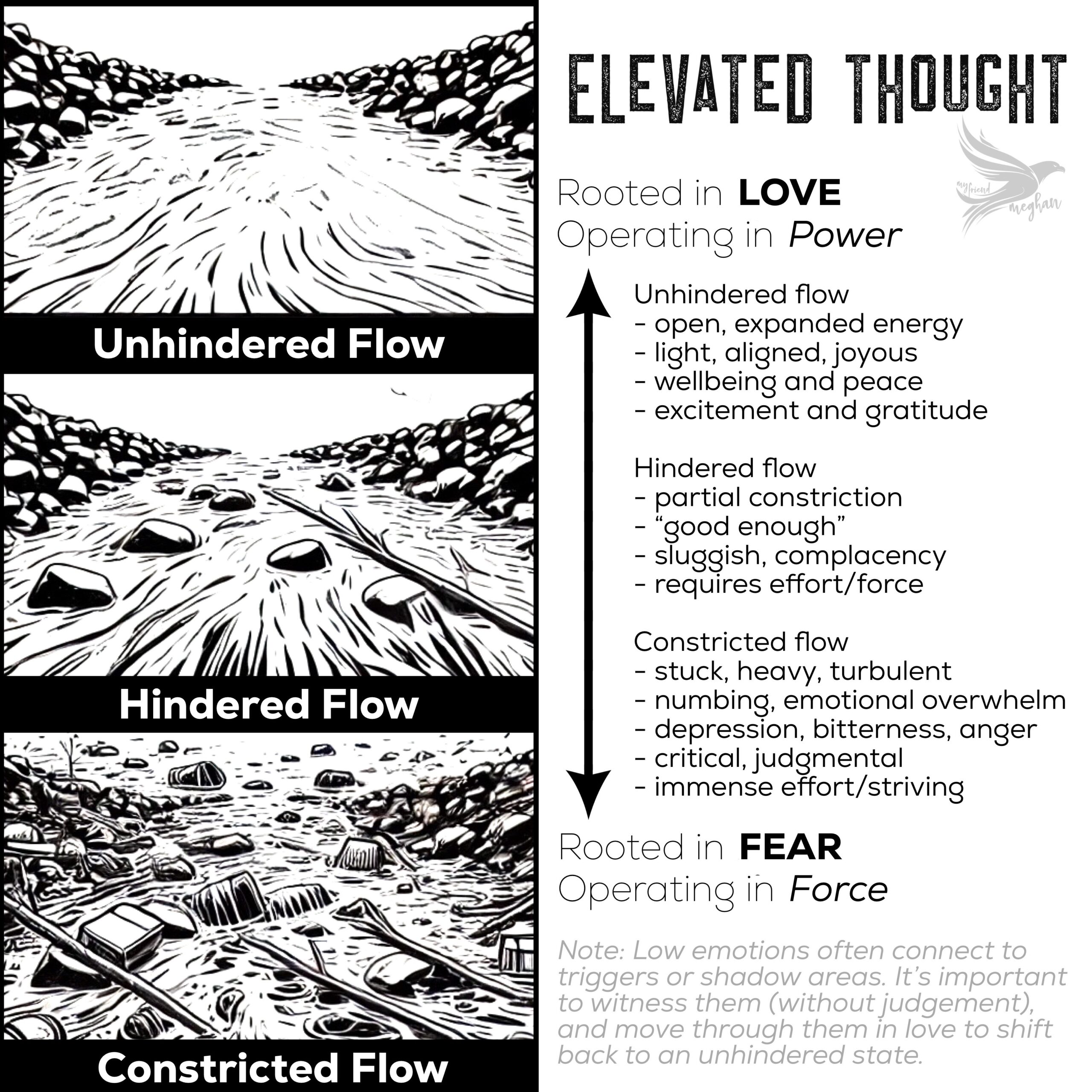
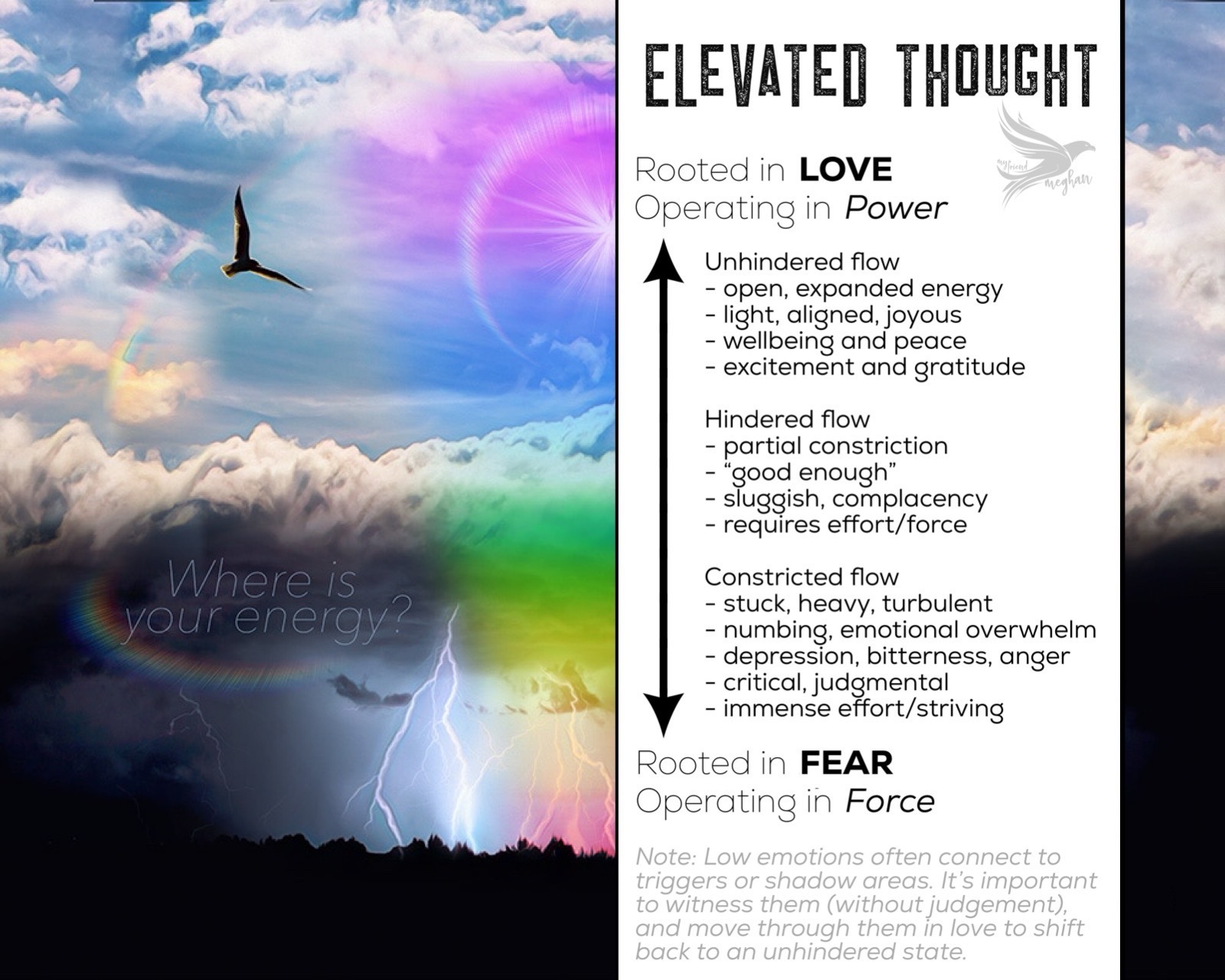
In my original post on Elevated Thought, I shared a framework to help identify whether your energy is in a state of unhindered, hindered, or constricted flow. Since then, I’ve explored how that awareness can be applied to shape the way we move forward with trust and spiritual discernment. But what about the moments when…

Applying Elevated Thought: Walking with Trust and Discernment
When I first introduced the concept of Elevated Thought, it was about mapping the energetic terrain we move through every day. Whether we’re in unhindered, hindered, or constricted flow, how we feel gives us important clues about our alignment. But knowing the map is only the beginning. This post is about living it out—what it…

Level 9: Conscious Mind (9 Levels of Consciousness)
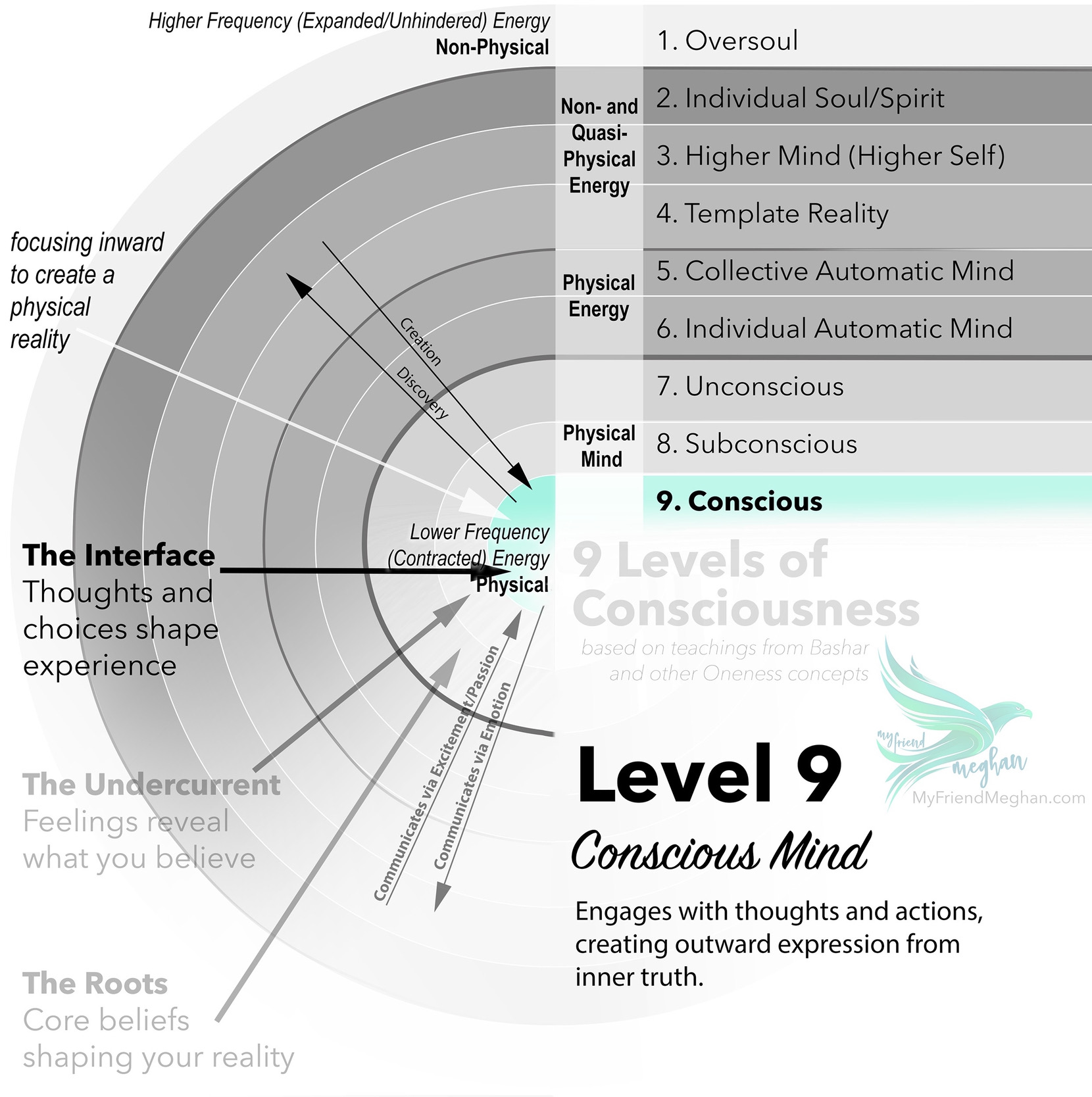
Not every thought comes from deep within. Some are right at the surface—like mental chatter, snap judgments, or the stories we tell ourselves about what’s happening. This is the domain of the Conscious Mind: the part of awareness that interprets, decides, and responds in real time. While it doesn’t access the full depth of our…

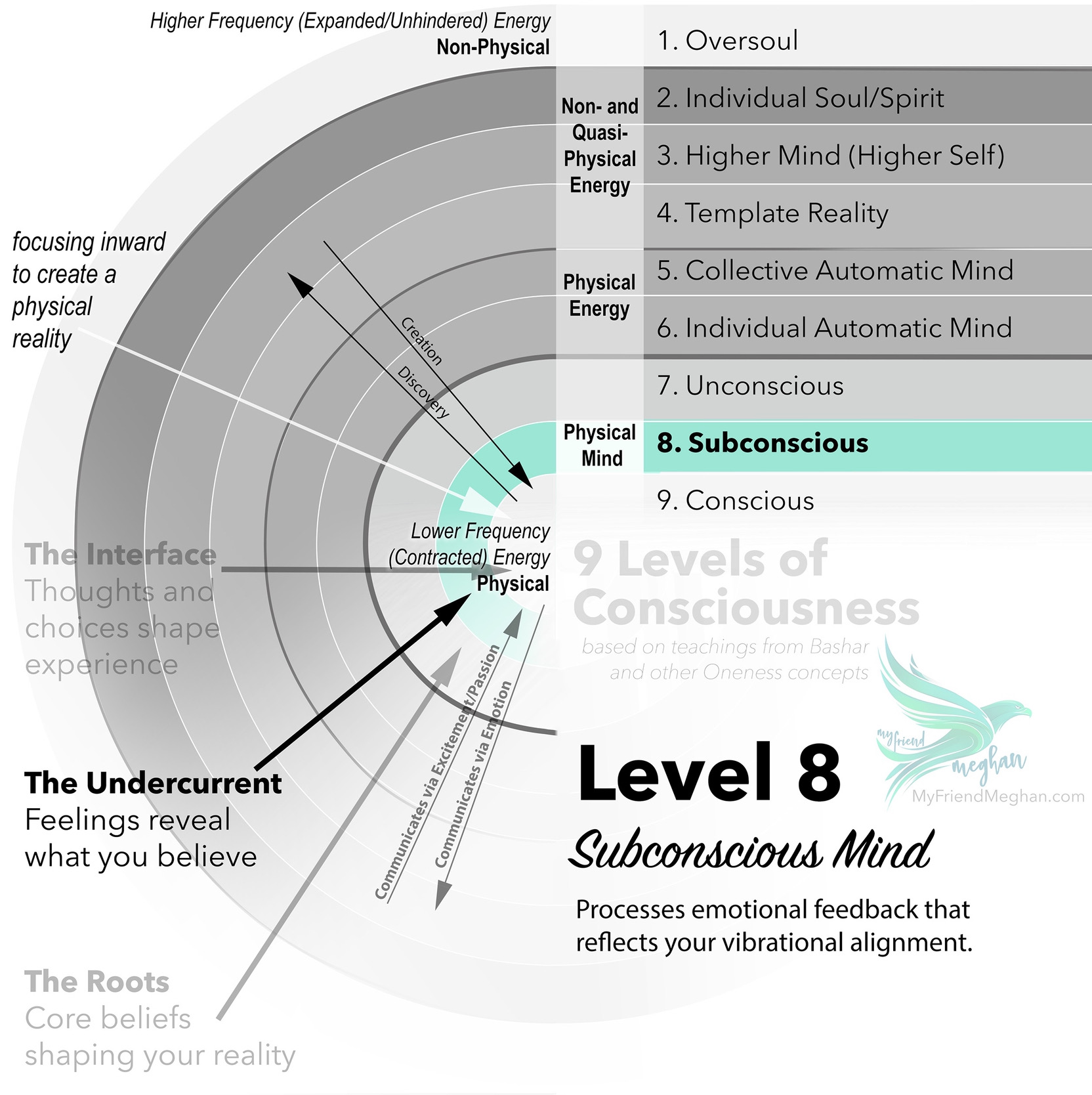
Level 8: Subconscious Mind (9 Levels of Consciousness)
Some emotions feel louder than others—unexpected sadness, sudden rage, simmering shame. Sometimes we understand where they’re coming from. But more often, we don’t—because emotion arises deeper than conscious thought. It begins in the Subconscious, where our energetic responses reflect the beliefs rooted in the Unconscious Mind. If the unconscious (Level 7) houses our core assumptions,…

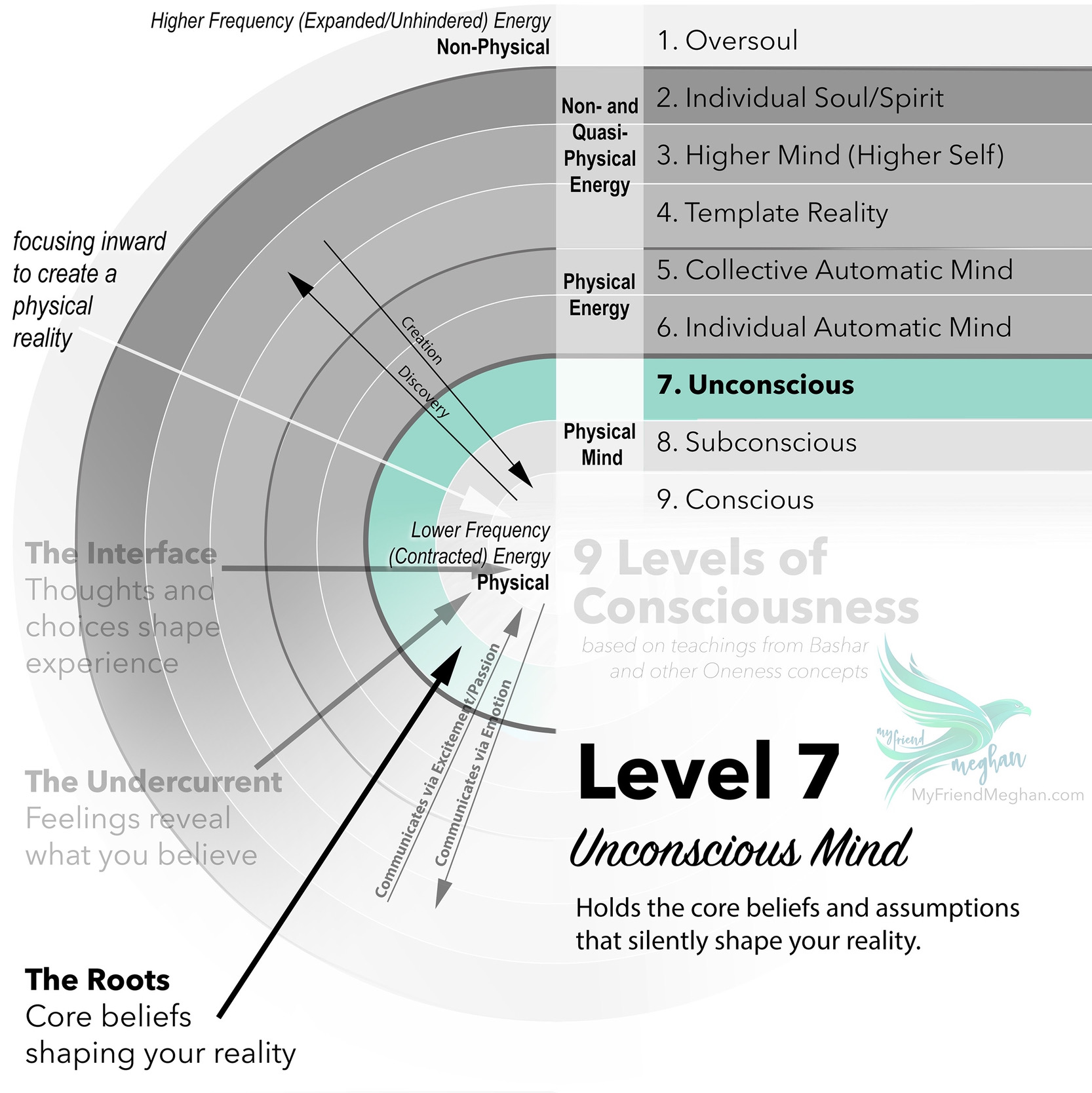
Level 7: Unconscious Mind (9 Levels of Consciousness)
Some patterns feel impossible to shake. No matter how much we grow or how many tools we use, certain behaviors, reactions, or beliefs seem to persist. That’s often because they’re rooted deeper than conscious thought—buried in the Unconscious Mind. This level of consciousness reveals the hidden beliefs and assumptions quietly shaping our reality from within.…

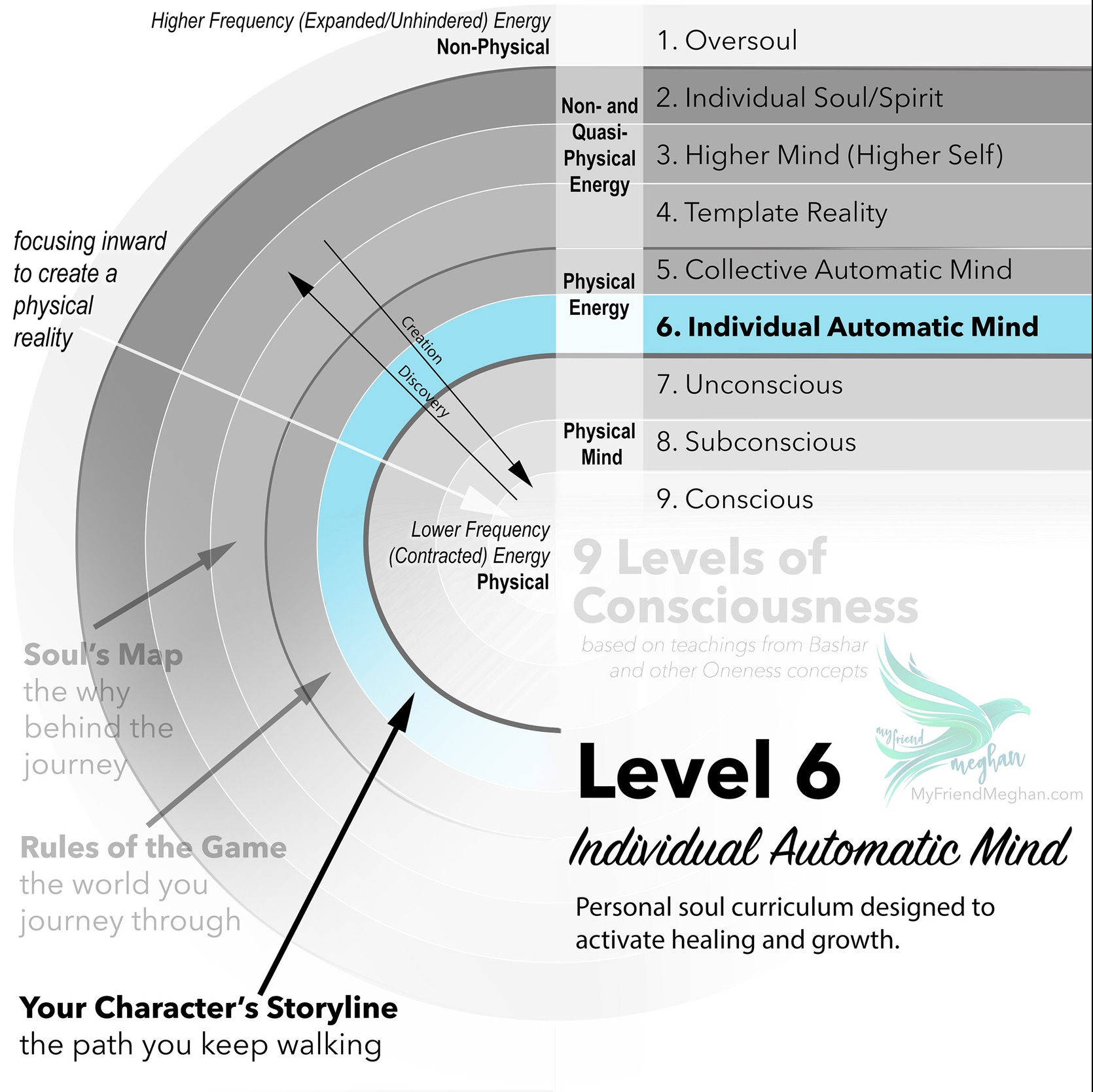
Level 6: Individual Automatic Mind (9 Levels of Consciousness)
From the outside, our lives can sometimes feel like a series of repeated experiences—running into the same relationship dynamic, the same obstacle, the same emotional struggle. But this isn’t just coincidence or luck. At this level of consciousness, patterns hold meaning. They reflect what we’re here to explore, learn, or heal. While the Collective Automatic…