
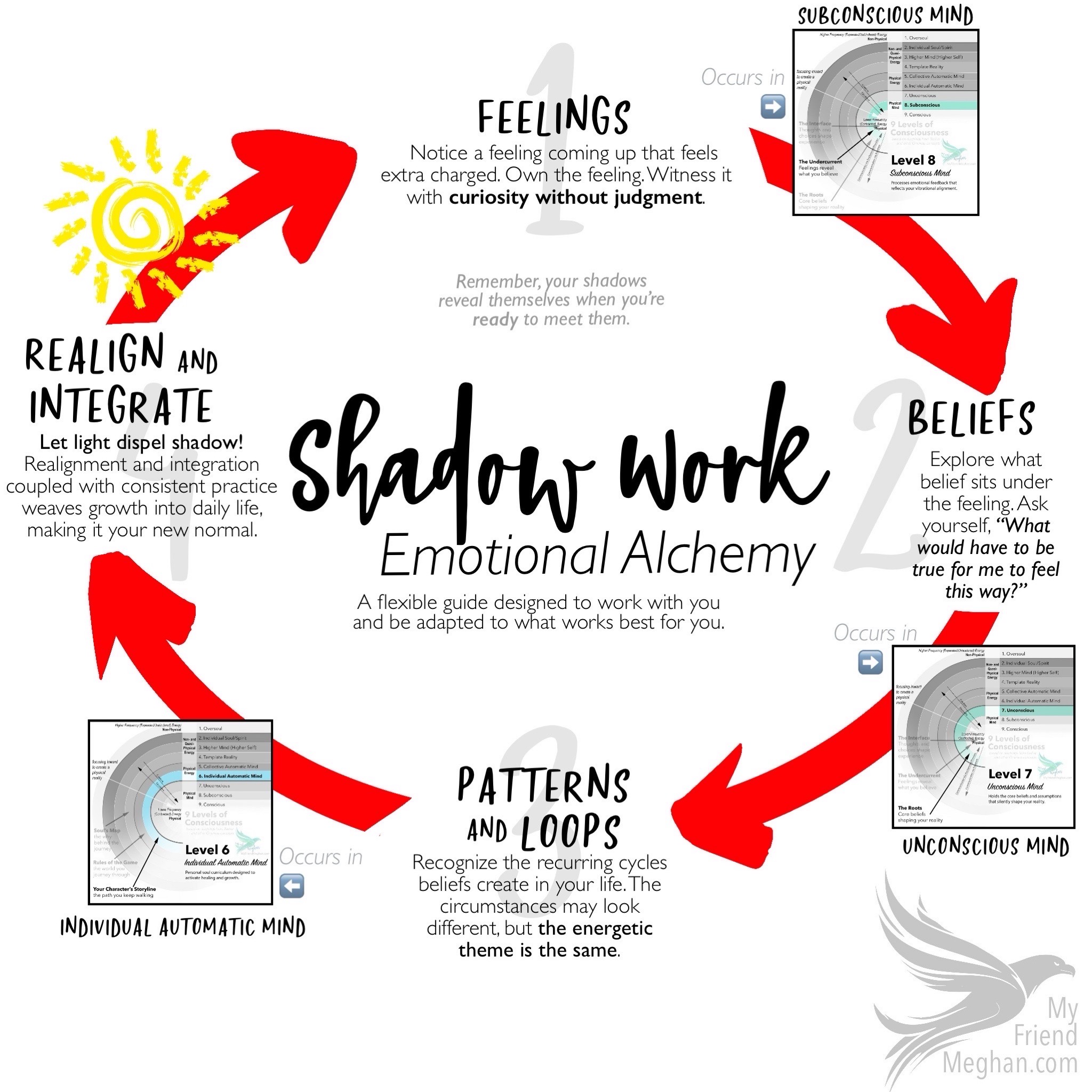
Shadow work is deeply personal, and how you move through it matters as much as that you do it at all. This post introduces one of the shadow work modalities you’ll find on this site — Emotional Alchemy — a 4-step process for moving through emotional intensity with intention and compassion. Understanding what shadow work is and when your shadows are ready to be met can help you approach this framework with greater ease.
I have documented multiple shadow work modalities, which are captured on the Shadow Work key teachings page. Emotional Alchemy is one of them. The overview of the process is below, and for the detailed exploration of each step, visit:
- Shadow Work: Emotional Alchemy (Intro)
- Step 1: Working with Feelings (Subconscious)
- Step 2: Working with Beliefs (Unconscious)
- Step 3: Working with Patterns and Loops (Individual Automatic Mind)
- Step 4: Realignment and Integration (Emotional Alchemy)
In Shadow Work: My Process of Emotional Alchemy, I share my personal experience with this process and the layers of healing it can uncover. This series dives deeper into each of the four steps, giving you the context to work with them more intentionally.
The Four Steps of Shadow Work: Emotional Alchemy
This is simply one framework for shadow work, meant to be adapted to your own style and depth of practice. Think of it as a repeatable path you can walk any time an emotional reaction feels bigger than the moment.
- Feelings – Identify and own the emotion. Pause long enough to name what you’re feeling with curiosity not judgment. As discussed in the 9 Levels of Consciousness, this occurs at the Subconscious level.
- Beliefs – Find the belief the emotion is tied to by asking yourself: “What would I have to believe is true in order to feel this way?” Let the answer rise without forcing it. This occurs at the Unconscious level.
- Patterns and Loops – Recognize the pattern or loop by noticing how this belief shows up in recurring thoughts, reactions, or behaviors. This occurs at the Individual Automatic Mind level.
- Realignment & Integration: Emotional Alchemy – Gently offer yourself the truth that was missing, whether through affirmations, compassionate self-care, or reparenting. Let awareness dissolve the illusion, and anchor the new belief into your lived experience.
Why This Framework Matters
When we work through these four steps, we’re doing more than processing emotions—we’re changing the internal landscape that shapes our lives. This isn’t about bypassing discomfort or pretending to be “high vibe.” It’s about seeing clearly, choosing alignment, and allowing that choice to ripple through every part of our being.
The beauty of this process is that it doesn’t require perfection. Every time you pause, reflect, and realign, you’re reinforcing a pattern of presence and self-trust. Over time, this becomes your new default—one rooted in awareness, not reaction.
Actionable Insights
- Notice when intensity feels out of proportion. Think of a time your emotional reaction felt bigger than the situation. What might that moment be showing you about an unseen belief or wound beneath the surface?
- Examine what you inherited. Which family rules, cultural messages, or unspoken expectations still shape your choices today—and do they truly reflect who you are now?
- Ask yourself what belongs. When a belief or pattern surfaces, pause and consider: is this something I consciously want to carry forward, or is it ready to be released?
Leave a Reply